Three Essential Ingredients for Your Wastewater Treatment Plant Design-Build Strategy
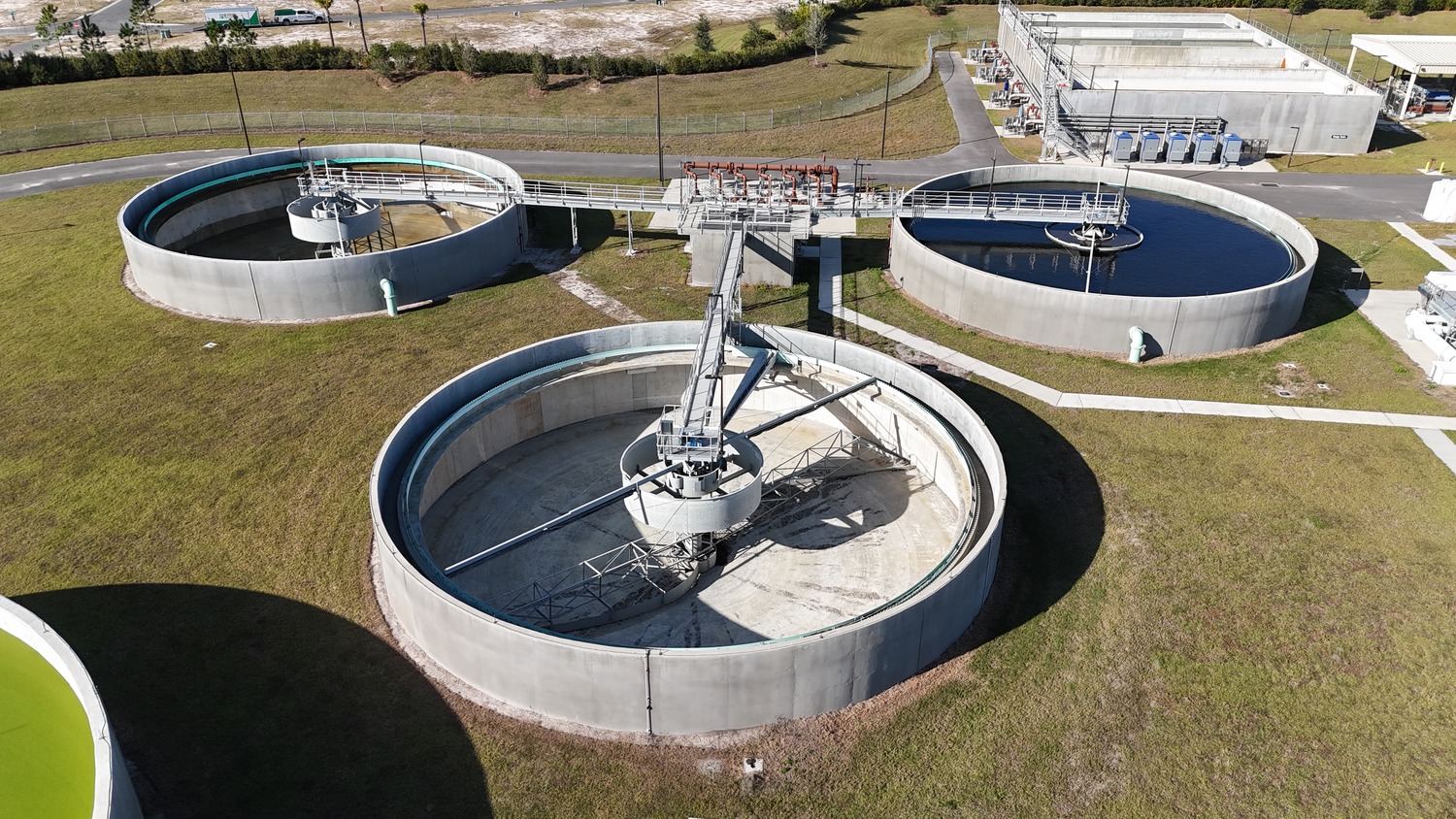
In May 2023, phase one of the Gibson Place Utility Company Wastewater Treatment Plant was cleared to service The Villages, Florida, one of the country’s fastest-growing master-planned communities and home to the world’s largest active retirement community.
Rob Ern and Michael Scullion found themselves with a plot twist on their hands. To meet pressing community needs, what had started out as a design strategy for a 3 million-gallon-per-day (mgd) wastewater treatment plant had suddenly evolved into a 4 mgd project after plant construction had begun. The headworks was designed, pipe was in the ground and the concrete for the headworks had already been poured. It was up to the design and construction team — including Principal-in-Charge Ern and Project Manager Scullion — to adjust course while staying on schedule.
So they did.
By May 2023, phase one of the Gibson Place Utility Company Wastewater Treatment Plant had been cleared to service The Villages, Florida, one of the country’s fastest-growing master-planned communities and home to the world’s largest active retirement community.
In any other instance, a capacity change at that project stage would have put a major wrench in the construction process of a critical piece of infrastructure. But because the team building the plant was using the progressive design-build project delivery method, construction remained on schedule.
Design-build project delivery is gaining traction in the industry. While formerly considered an alternative delivery method, the Design-Build Institute of America (DBIA) reports that design-build has become the fastest-growing and most commonly used project delivery method in the United States. In fact, design-build is projected to account for $2.6 trillion of construction spending between 2024 and 2028.
The method is proven to save time and money on complex projects. Case in point: the GPU wastewater treatment plant for The Villages was designed, permitted, constructed and cleared for service within 29 months, with phase one providing 2 mgd and with 4 mgd planned for phase two. Had the project undergone a hard bid process, it could have easily taken four to five years. That wasn’t an option for the community—with new schools already under construction, the plant needed to be complete before the 2023 school year commenced.
“In the hard bid scenario, I need to do 100% design and then go through the bid process,” explains Ern, water/wastewater director at Halff. “In this case, at the 30% overall design stage, we were able to accelerate final structural design on critical components of the plant, allowing us to begin pouring concrete on the largest structures. We were a year into construction before we finalized our overall plant design.”
Ern predicts that over the next five to 10 years, the vast majority of water and wastewater plant work will turn to collaborative delivery methods—including design-build. “We’re getting to the point where it’s becoming the delivery method of choice for large, complex jobs,” he says.
But there’s an art to mastering the method. Executing well on a design-build project goes beyond merely choosing the method itself, as illustrated by this wastewater treatment plant for The Villages. The project was recently recognized with a Merit Award for Outstanding Water/Wastewater Project at the DBIA 2026 Florida Region Conference. The award signifies excellent implementation of design-build techniques meeting or exceeding owner’s expectations.
With that in mind, here are three ingredients for a successful design-build process:
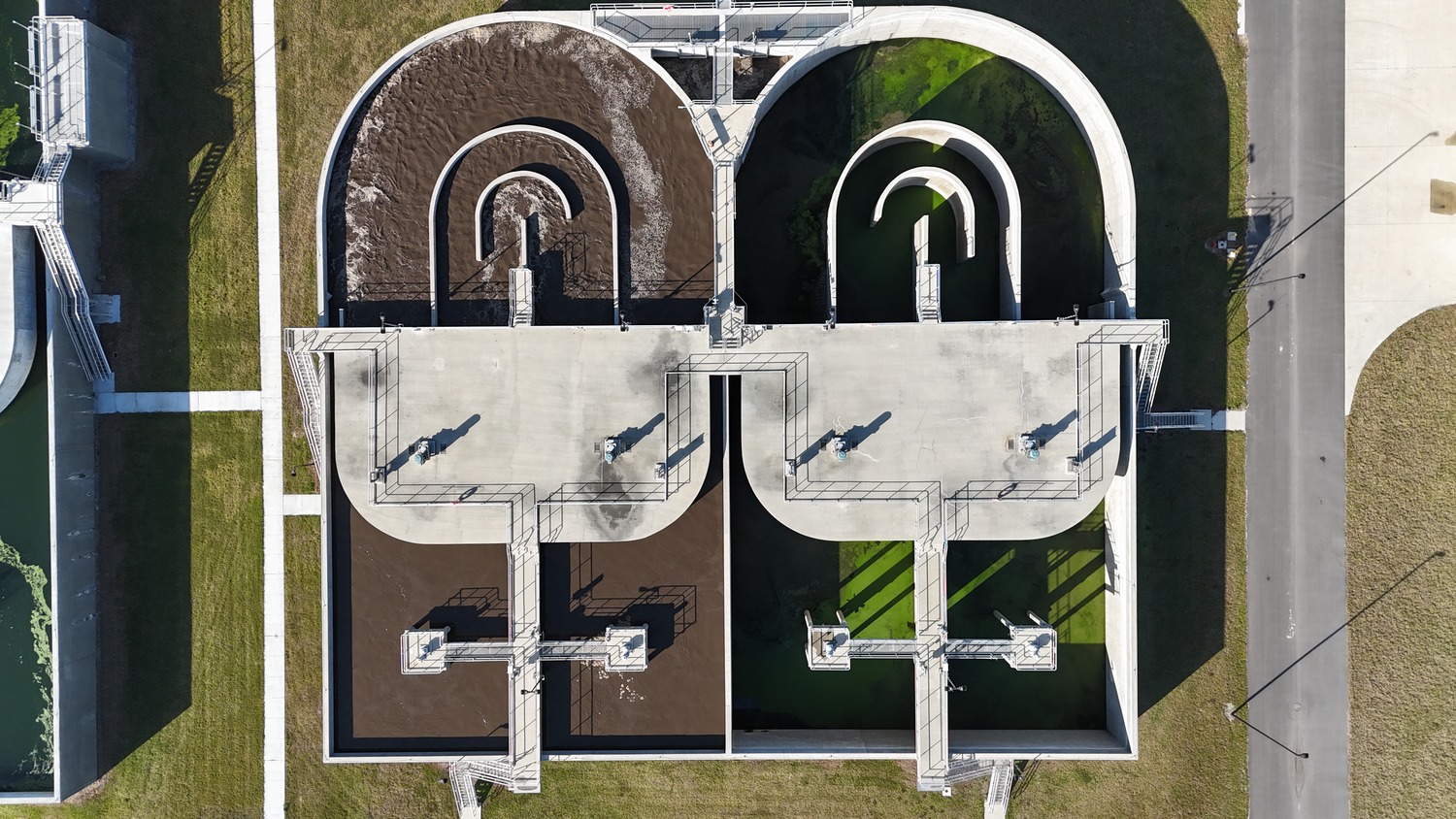
Between 2024 and 2028, design-build projects are expected to account for $2.6 trillion of construction spending.
1. Trust and Collaboration With Partners Happens By Design, Not By Accident
Developing relationships with good design-build contractors is essential to making any design-build project work, Ern says. Selecting the right teaming partner is of the utmost importance.
In the case of the GPU WWTP for The Villages, Halff worked with North Kansas City-based Garney Construction, a longtime partner. Ern and Garney first joined forces in 1998 to construct a wastewater treatment plant for Little Sumter Utility Company. Since then, he and the firm have collaborated on 112 projects and honed a level of trust that is vital to the design-build process.
“We’re not designing in a vacuum,” Ern says. Involving the contractor in the design process allowed for real-time feedback. Constant communication was key — biweekly design meetings including the designers, contractors and owner kept decisions moving, as did an action log.
Ern says he also prioritizes involving the ultimate user of the product in design conversations. “While I have my ideas, and the contractor has his ideas,” Ern says, “at the end of the job, the end user is going to have to own it and run it for the next 50 years.”
For this project, owner engagement included a kickoff charette to discuss basis of design, proposed equipment and lessons learned at other facilities. In addition, the team scheduled site visits to review proposed equipment.
Layering in highly communicative involvement with strategically identified partners played a critical role in keeping a complex project on track.
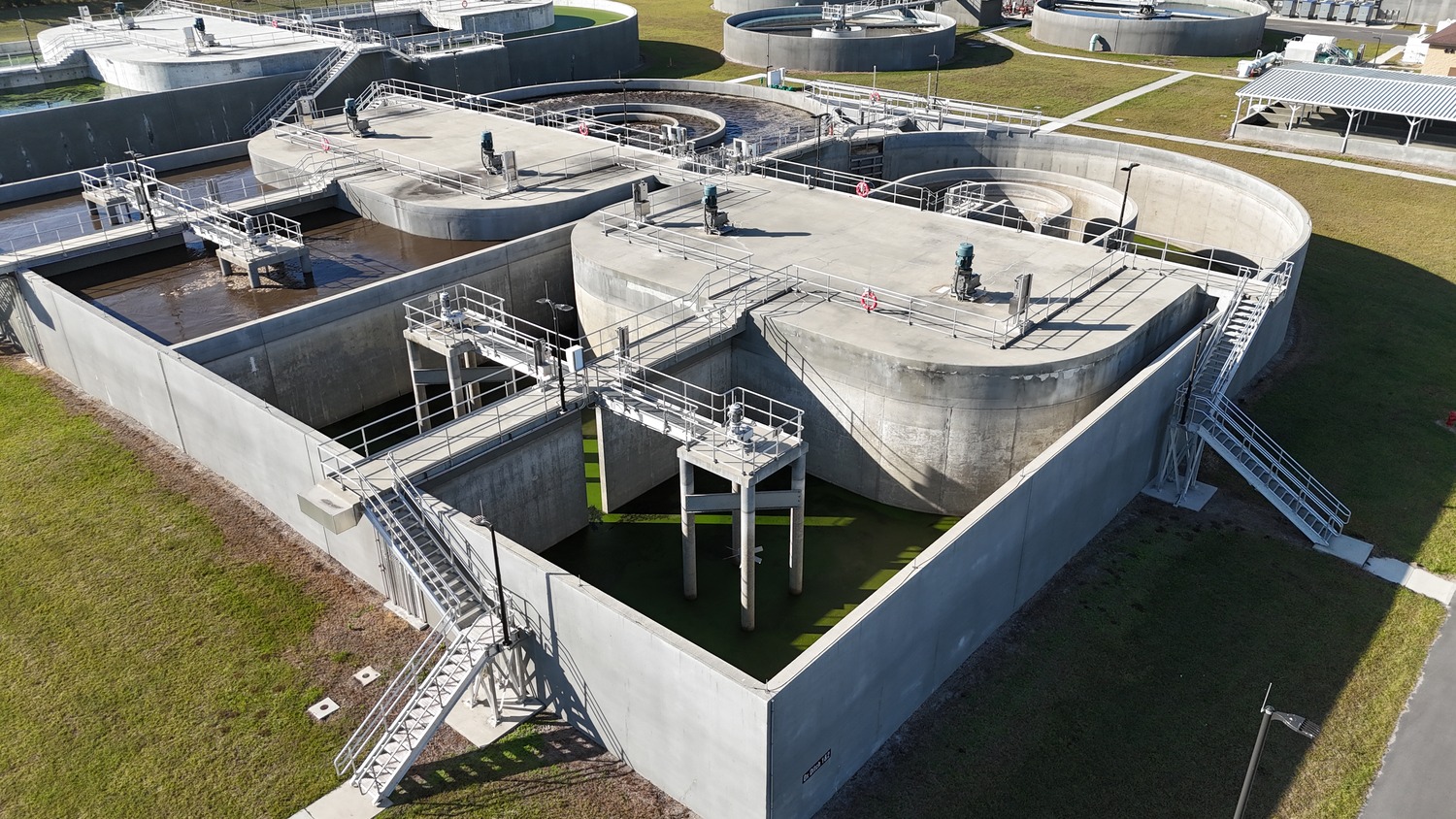
The plant created for The Villages was cleared for service within 29 months, with phase one providing 2 mgd and with 4 mgd planned for phase two.
2. Early Geotechnical, Environmental and Vendor Engagement Is Key
For high-velocity projects that incorporate design-build strategies, involving geotechnical services, environmental assessments and equipment vendors early on makes all the difference.
In the case of this project, which was situated in Central Florida, project leaders had to take into consideration that much of the state sits on porous lime rock, opening the door to karst zones. Depending on the depth of that lime rock, there is potential for significant sinkholes—not an ideal condition for placing a heavy concrete structure.
“Before we even finalized the site layout, we have to know what that subsurface geology looks like,” Ern shares. “And in this case, we found what we feared we would find: lots of voids that would not provide stable structural support for these tanks. So we rearranged the site layout. We did some more borings, and we still found more of it. So we optimized the site layout based on what we found and then hired a company to come in and inject pressure grout to stabilize the surface conditions.”
That grouting created a stable environment to build on and kept the project on pace.
In addition, early vendor engagement allowed for early procurement of long-lead items like Ovivo oxidation ditch aerators and mixers, as well as clarifier mechanisms. Meanwhile, design continued throughout the first year of construction, allowing for accelerated project delivery.
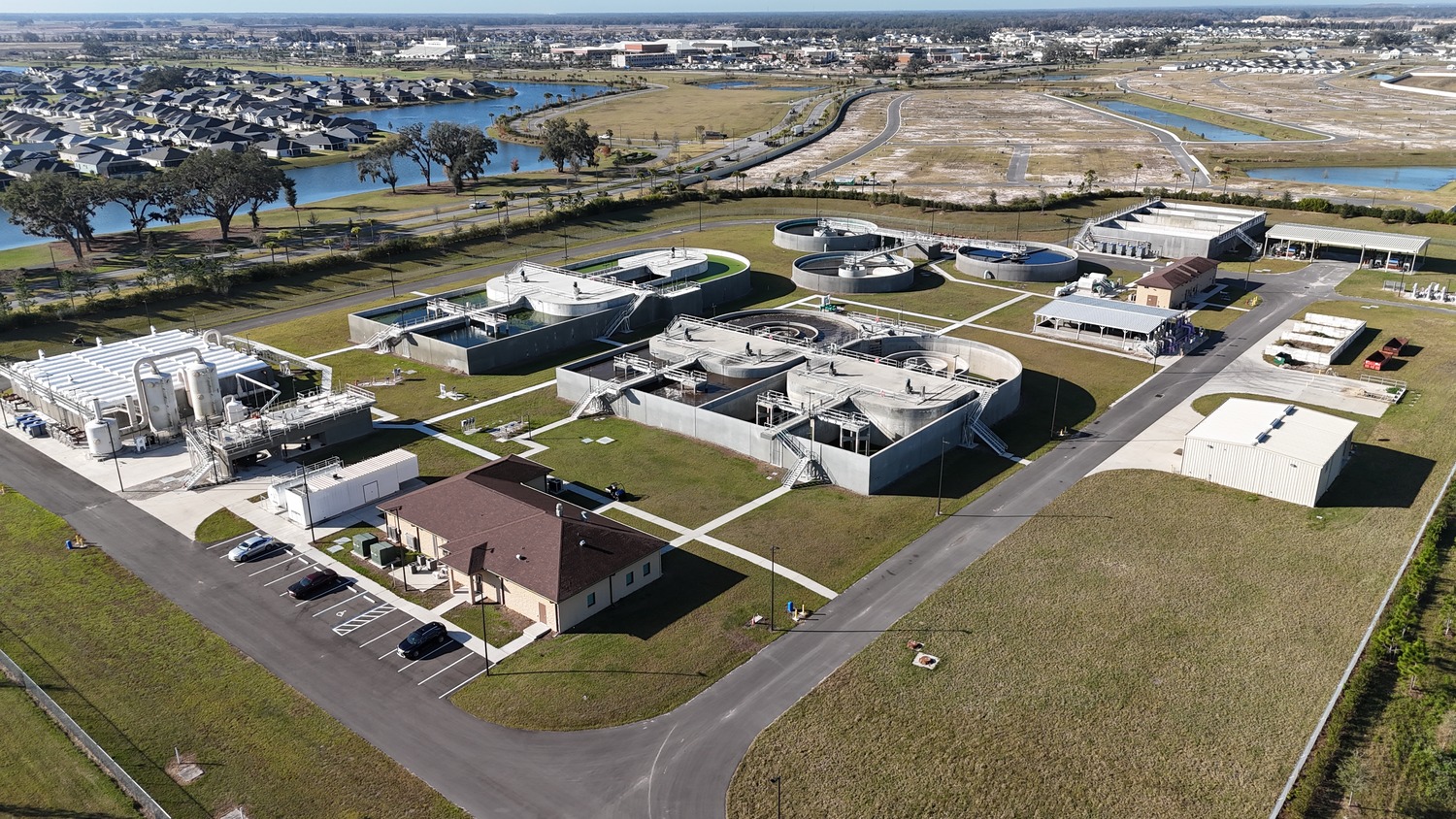
Early geotechnical and environmental work allowed major structures to advance early—oxidation ditch and clarifier slabs were poured while the overall project was at 30% design.
3. Established Relationships with Permitting Agencies Add Acceleration
In the case of this treatment plant, the team’s strong permitting agency relationships helped secure key permits at 30% design. That included the Florida Department of Environmental Protection (FDEP) Wastewater Permit, the City of Wildwood Site Development Permit, and the FDEP Stormwater Environmental Resource Permit (ERP).
Most agencies have turnaround times for project reviews, which last about 30 days. For time-sensitive projects, ensuring all questions are answered up-front is essential. “We want to make their job easier,” Ern says.
Pre-established relationships and outreach allowed for just that, adding to the project’s expedited delivery.
Halff is no stranger to taking complex, time-sensitive endeavors and turning them around with quality and speed. For experts like Ern, design-build efforts must include a mix of tight relationships, proactive coordination and effective communication.
Because these key ingredients were all a part of the GPU WWTP project, the plant was delivered in May 2023, just 29 months after contract execution and well before the 2023 school year commenced. This ensured The Villages community would have access to essential infrastructure well before needs were dire.

Recent Stories

5 Halff Summer Spots to See in 2026
There are plenty of ways to “Halff” fun this summer! Immerse yourself in a handful of Halff’s recent projects that…

Case Study: The Project That Is Turning Stormwater Into Drinking Water for an Arid Region
A drainage district in Texas’ Deep South county of Hidalgo is employing innovative methods to convert stormwater into a steady…